The Ultimate Guide to Choosing the Right Grease for Steel and Aluminum
Understanding the Basics of Grease Selection
What is Grease and Why is it Important?
Grease serves as a semi-solid lubricant that stays in place where oils would run off. It combines a base oil with thickeners and additives to protect moving parts from friction, corrosion, and wear. Steel components in heavy machinery demand consistent lubrication to prevent scoring, while aluminum parts require formulations that avoid chemical reactions. Proper grease application extends equipment life and reduces downtime in industrial settings across the USA. Without the right grease, bearings overheat and fail prematurely. Maintenance teams rely on grease to seal out contaminants like dust and moisture that accelerate damage. This holds especially true for exposed steel and aluminum assemblies in automotive, aerospace, and manufacturing environments. Regular greasing also minimizes energy loss by keeping friction coefficients low during operation.
Types of Grease: A Comparative Overview
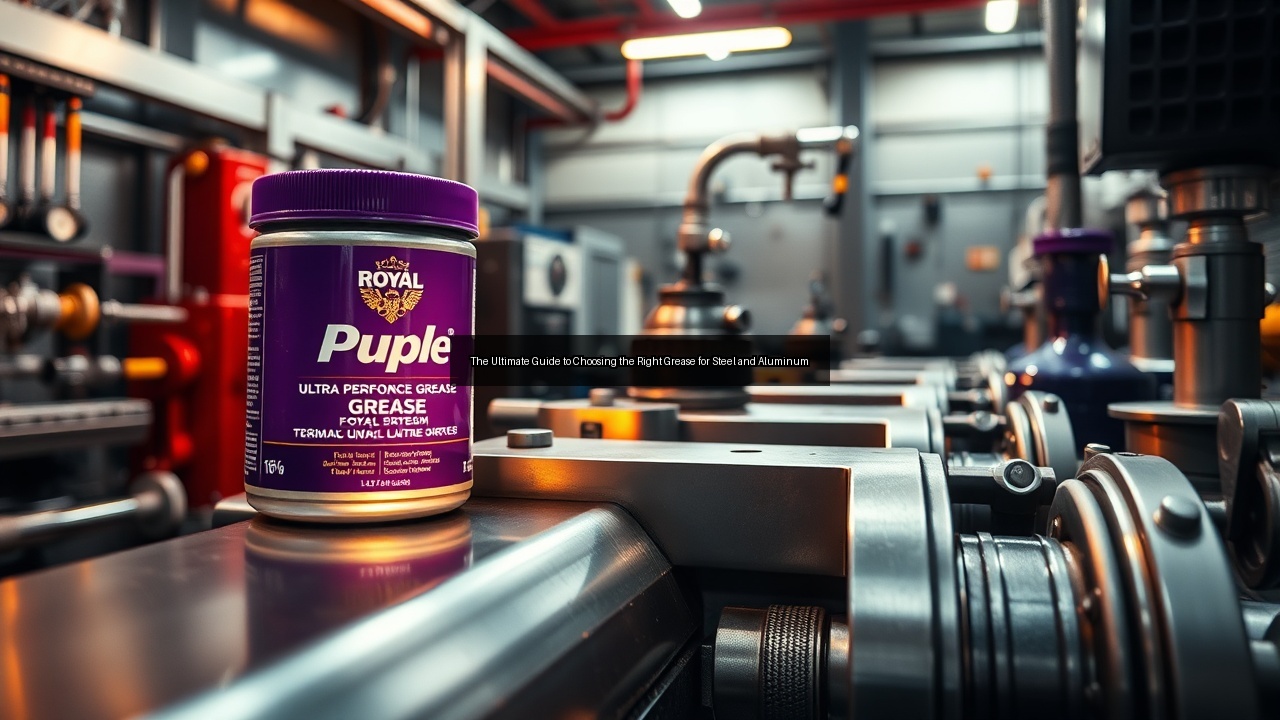
Lithium complex greases handle high temperatures well and suit many steel applications. Calcium sulfonate greases resist water washout effectively for aluminum exposed to wet conditions. Polyurea greases offer long life in electric motor bearings but may not match the extreme pressure needs of steel gears. Synthetic base oils in high performance grease improve performance across wide temperature ranges compared to conventional mineral options. Royal Purple Ultra Performance Grease stands out with its proprietary Synerlec additive that enhances film strength on both steel and aluminum surfaces. Moly-fortified greases provide extra protection under heavy loads but can stain aluminum if over-applied. Each type varies in drop point, penetration, and compatibility, so matching the grease to the metal prevents premature breakdown. Operators compare these properties before selecting products for mixed-metal assemblies.
Factors Affecting Grease Performance
Temperature extremes, load conditions, speed, and environmental exposure all influence how grease performs. High heat causes some greases to soften and leak away from steel shafts, while cold stiffens them and blocks flow to aluminum bushings. Contaminants such as water or chemicals degrade the thickener structure and reduce lubrication effectiveness. Vibration in steel frames can pound grease out of contact zones unless the product contains tackifiers. Speed affects shear stability, with fast-rotating aluminum components needing greases that resist thinning. Pressure from heavy loads demands extreme pressure additives to avoid metal-to-metal contact. Proper storage in sealed containers prevents oxidation before use. Regular monitoring of grease condition through sampling helps predict when relubrication becomes necessary in demanding USA industrial operations.
Key Considerations for Steel and Aluminum Applications
Understanding the Properties of Steel and Aluminum
Steel offers high tensile strength and hardness, making it ideal for load-bearing shafts and gears that experience constant sliding contact. Its surface readily accepts most conventional greases without adverse reactions. Aluminum provides lightweight strength and excellent thermal conductivity yet remains softer and more reactive to certain additives like sulfur or chlorine. These differences require careful grease selection to avoid galvanic corrosion where steel and aluminum meet. Aluminum also expands more with heat, altering clearances that affect lubricant film thickness. Engineers account for these material traits when specifying grease for mixed assemblies in vehicles or machinery. Hardness variations mean steel tolerates higher contact pressures, whereas aluminum needs greases with better boundary lubrication to prevent scoring. Understanding these properties guides decisions that keep components running smoothly under real-world stresses.
Choosing the Right Grease for Steel Applications
Steel bearings and gears benefit from greases with strong extreme pressure additives and high drop points to withstand heavy loads and elevated temperatures. Lithium complex or calcium sulfonate thickeners deliver reliable performance in steel rolling mills and construction equipment. Operators apply grease at scheduled intervals based on operating hours to maintain protective films. Royal Purple Ultra Performance Grease excels here with its ability to handle shock loads without breaking down. Steel surfaces also require greases that resist oxidation when exposed to air during slow rotations. Matching NLGI grade to the application prevents over-greasing that could cause churning and heat buildup. Steel components in the USA often operate in dusty environments, so greases with good sealing properties help exclude abrasive particles. Consistent selection based on speed and load data ensures maximum service life.
Choosing the Right Grease for Aluminum Applications
Aluminum parts need greases free of reactive additives that could cause pitting or discoloration. Synthetic formulations with aluminum-compatible inhibitors protect against corrosion while maintaining low friction. High performance grease products like Royal Purple Ultra Performance Grease work well because their additive package bonds effectively without attacking the softer metal. Aluminum housings in pumps and compressors require greases that stay pliable across temperature swings to accommodate expansion. Application quantity matters more with aluminum to avoid hydraulic lock in tight clearances. Maintenance crews inspect aluminum surfaces for signs of incompatibility before committing to a grease type. Proper choice reduces wear on aluminum threads and sliding surfaces in automotive and marine equipment. This approach keeps aluminum components protected without compromising the integrity of adjacent steel parts.
The Role of High-Performance Grease in Lubrication
What Makes a Grease High-Performance?
High performance grease contains advanced base oils and additives that deliver superior film strength, thermal stability, and load-carrying capacity. These formulations resist shear breakdown and maintain consistency under continuous operation. Enhanced oxidation resistance allows longer relubrication intervals compared to standard products. Royal Purple Ultra Performance Grease incorporates Synerlec technology that creates a microscopic layer on metal surfaces for reduced friction. High performance characteristics also include better water resistance and mechanical stability for demanding steel and aluminum contacts. Viscosity index improvers keep the lubricant effective across wide temperature bands. Such greases undergo rigorous testing for four-ball wear and Timken OK load to verify real-world capability. Selecting high performance options reduces overall lubricant consumption while improving equipment reliability in industrial settings.
Advantages of Using Royal Purple Ultra Performance Grease
Royal Purple Ultra Performance Grease provides exceptional protection for steel and aluminum through its balanced additive system that handles both extreme pressure and corrosion. Users report extended bearing life and fewer failures in high-load applications. The grease maintains its structure under vibration and resists washout in wet environments common to USA manufacturing plants. Its synthetic base offers clean operation with minimal residue buildup on aluminum surfaces. Royal Purple Ultra Performance Grease also reduces operating temperatures by lowering friction coefficients across mixed-metal assemblies. Maintenance teams appreciate the longer service intervals that cut labor costs. Compatibility with common seals prevents leaks that plague lesser greases. These advantages make it a preferred choice for critical lubrication points where downtime carries high expenses.
Application Techniques for Optimal Lubrication
Technicians clean fittings thoroughly before introducing new grease to avoid contamination. They apply Royal Purple Ultra Performance Grease in small amounts at regular intervals rather than large single doses that can displace seals. Proper technique includes purging old grease until fresh material appears at relief points. This ensures complete coverage on steel and aluminum contact surfaces. Slow, steady pumping prevents air pockets that reduce lubrication effectiveness. Temperature monitoring during initial runs confirms the grease performs as expected. Documentation of quantities and intervals helps optimize future schedules for each component type. These methods maximize the benefits of high performance grease across diverse operating conditions.
Tools and Techniques for Effective Greasing
Essential Tools for Grease Application: Grease Guns and Air Pump
Grease guns deliver precise amounts of lubricant through fittings on steel and aluminum machinery. Manual lever models suit small jobs, while battery-powered units speed up large-scale maintenance. Air pump systems connect to shop compressors for high-volume delivery without operator fatigue. These tools allow consistent pressure control during application to steel bearings or aluminum pivots. Quick-connect couplers on grease guns reduce spillage and speed fitting changes. Air pump reservoirs hold multiple cartridges of Royal Purple Ultra Performance Grease for continuous work. Proper tool selection matches the volume needed and accessibility of lubrication points. Regular cleaning of nozzles prevents clogs that interrupt flow and compromise protection on critical components.
Understanding Grease Pressure and Its Importance
Grease pressure determines how effectively lubricant reaches internal contact zones in bearings and joints. Too little pressure leaves steel and aluminum surfaces under-protected, while excessive force can damage seals or force grease past intended paths. Gauges on grease guns and air pump setups help operators maintain optimal levels around 2000 to 5000 psi for most industrial fittings. Pressure also influences how far grease travels through long feed lines on large equipment. Monitoring pressure reveals blockages or empty cavities that require attention. Royal Purple Ultra Performance Grease flows consistently under controlled pressure without separating. Technicians adjust regulator settings on air pump systems to match component requirements. Correct pressure management ensures complete lubrication coverage and prevents costly failures in steel and aluminum assemblies.
Best Practices for Lubricating Steel and Aluminum Components
Inspect components for wear before greasing to identify issues that lubrication alone cannot fix. Match grease type to each metal while using Royal Purple Ultra Performance Grease for mixed steel and aluminum contacts. Apply lubricant at recommended intervals based on manufacturer data and operating conditions. Clean grease fittings and surrounding areas to block contaminant entry. Use grease guns and air pump equipment calibrated for the correct pressure on every point. Rotate machinery slowly after application to distribute the lubricant evenly across surfaces. Record lubrication activities to track consumption and spot trends in usage. These practices maintain peak performance and extend service life for steel and aluminum parts throughout USA facilities. Regular adherence prevents unexpected breakdowns and supports efficient operations.